
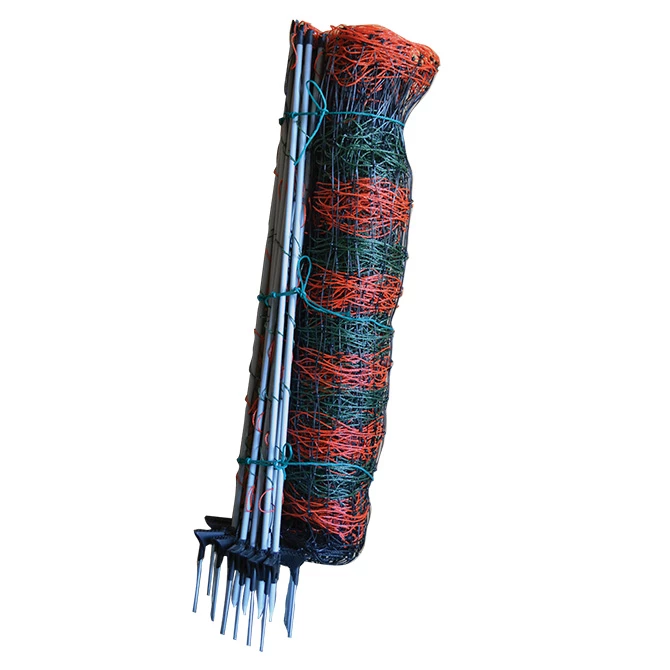
Kencove Electric Netting 50ft
Original price was: $94.95.$66.47Current price is: $66.47.
- Where quality meets convenience.
- Shop with Zero Worries
- No-Questions-Asked Returns
- Multiple payment options for secure shopping with SSL

Prevention is the best medicine when it comes to fencing your hives. Bears are easily discouraged by electric fencing if they have not been previously rewarded with a brood or honey meal. If they have been successful they can be very hard to keep out of the apiary. If you know there are bears or other pests in your area, setting up an electric fence can save you the heartbreak and cost of replacing bees and equipment. We are happy to offer a selection of fencing equipment depending on the location of your hive and the number of hive you need to protect. These are the units we use and recommend.
Double-spike step-in posts are built into the netting to make it a breeze to set up, tear down, or move. Semi-rigid vertical stakes every 7″ help keep the net from drooping between posts. Horizontal lines are spaced closer together at the bottom and farther apart at the top providing superior predator protection. To prevent electrical shorting during weed growth, the bottom line is non-conductive. In this system the intruder complete the circuit through the net. This greatly improves the performance of the fence in poor grounding conditions. Stainless steel conductors provide superior tensile strength, rust resistance, and permanence over copper and aluminum conductors.
Specifications
- 50′ long
- 12 horizontal lines
- 40″ height
- 7″ vertical line spacing
Tips from the Betterbee Apiary:
- Leave enough room to work between your hives and the fencing.
- Install your ground rod and energizer close to the fence netting when possible.
- For 12 volt batteries, place them in an empty nuc box to protect them from the elements.
- Overlap fence netting if it’s too long.
- Use 2 or 3 ground rods if you have dry soil.
- Take care when mowing or weed whacking! Fence easily gets caught and damaged.
Read more about how to install your electric fencing.
Be the first to review “Kencove Electric Netting 50ft”
Related products

Glass Honey Containers


Honey Containers

Glass Honey Containers

Honey Containers

Caps & Lids for Honey Containers
Honey Containers
Honey Containers
Honey Containers
Reviews
There are no reviews yet.